Original: $226.28
-65%$226.28
$79.20The Story
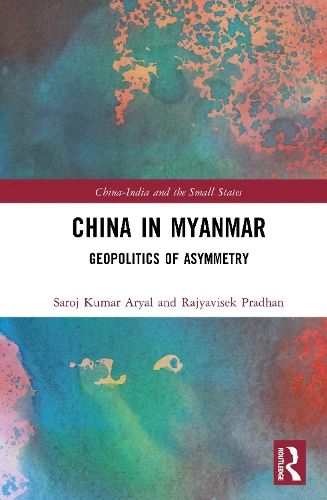
This book explores the complex power dynamics shaping China-Myanmar relations within the framework of asymmetrical geopolitics. By examining disparities in resources, influence, and capacity, it delves into how China leverages its economic and strategic dominance, particularly through the Belt and Road Initiative (BRI) and the China-Myanmar Economic Corridor (CMEC). It provides a nuanced understanding of Myanmar’s geopolitical significance as a site of competition and its delicate balance between dependence on China and autonomy.
The book highlights China’s asymmetric foreign policy strategies, the impact of the 2021 military coup on bilateral relations, and the challenges posed by stalled BRI projects amid ethnic conflict and local resistance. It also examines the socio-political and economic implications of China’s investments in Myanmar, addressing issues pertaining to migration, ethnic ties, and security. Through rigorous analysis, the book connects these elements to broader South Asian geopolitics, emphasizing Myanmar’s pivotal role in China’s regional ambitions and its access to the Indian Ocean.
This interdisciplinary volume is an essential resource for scholars, researchers, and students in International Relations, South Asian studies, Area Studies, Global Studies and Geopolitics. Additionally, journalists, policymakers, and academics interested in China’s rise, the Belt and Road Initiative, and South Asian geopolitics will find this book insightful.
Description
This book explores the complex power dynamics shaping China-Myanmar relations within the framework of asymmetrical geopolitics. By examining disparities in resources, influence, and capacity, it delves into how China leverages its economic and strategic dominance, particularly through the Belt and Road Initiative (BRI) and the China-Myanmar Economic Corridor (CMEC). It provides a nuanced understanding of Myanmar’s geopolitical significance as a site of competition and its delicate balance between dependence on China and autonomy.
The book highlights China’s asymmetric foreign policy strategies, the impact of the 2021 military coup on bilateral relations, and the challenges posed by stalled BRI projects amid ethnic conflict and local resistance. It also examines the socio-political and economic implications of China’s investments in Myanmar, addressing issues pertaining to migration, ethnic ties, and security. Through rigorous analysis, the book connects these elements to broader South Asian geopolitics, emphasizing Myanmar’s pivotal role in China’s regional ambitions and its access to the Indian Ocean.
This interdisciplinary volume is an essential resource for scholars, researchers, and students in International Relations, South Asian studies, Area Studies, Global Studies and Geopolitics. Additionally, journalists, policymakers, and academics interested in China’s rise, the Belt and Road Initiative, and South Asian geopolitics will find this book insightful.