Original: $226.28
-65%$226.28
$79.20The Story
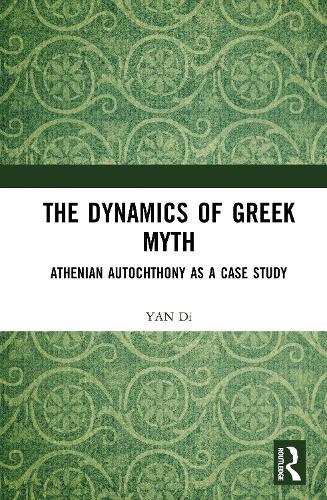
Combining structural analysis, historical enquiry and intertextual reading, this book offers a fresh interpretation of one of antiquity’s most enduring myths, autochthony, and provides a model for studying myths as living processes of cultural imagination.
Moving beyond approaches that treat myth as either a fixed symbolic system or a reflection of history, the book proposes a new framework for understanding myth as a dynamic cultural force. It argues that myths operate through the interplay of contextuality, structurality, and dialogicality, absorbing historical pressures, encoding symbolic tensions, and inviting reinterpretation across genres and generations. This framework is examined through the Athenian myths of autochthony—the claim that the Athenians originated from the soil of Attica. By tracing these narratives from early Greek poetry to classical civic ideology, tragedy, and philosophy, the author illustrates how autochthony influenced debates concerning gender, kinship, social order, and belonging. Through its analysis of the works of Hesiod, Aeschylus, Euripides, and Plato, the book demonstrates how myth became a site of cultural argument, enabling Athens to reconsider its origins and identity.
This book will appeal to students and scholars of classical studies, as well as to anyone interested in myths, cultural memory, and the formation of political identity.
Description
Combining structural analysis, historical enquiry and intertextual reading, this book offers a fresh interpretation of one of antiquity’s most enduring myths, autochthony, and provides a model for studying myths as living processes of cultural imagination.
Moving beyond approaches that treat myth as either a fixed symbolic system or a reflection of history, the book proposes a new framework for understanding myth as a dynamic cultural force. It argues that myths operate through the interplay of contextuality, structurality, and dialogicality, absorbing historical pressures, encoding symbolic tensions, and inviting reinterpretation across genres and generations. This framework is examined through the Athenian myths of autochthony—the claim that the Athenians originated from the soil of Attica. By tracing these narratives from early Greek poetry to classical civic ideology, tragedy, and philosophy, the author illustrates how autochthony influenced debates concerning gender, kinship, social order, and belonging. Through its analysis of the works of Hesiod, Aeschylus, Euripides, and Plato, the book demonstrates how myth became a site of cultural argument, enabling Athens to reconsider its origins and identity.
This book will appeal to students and scholars of classical studies, as well as to anyone interested in myths, cultural memory, and the formation of political identity.