The Story
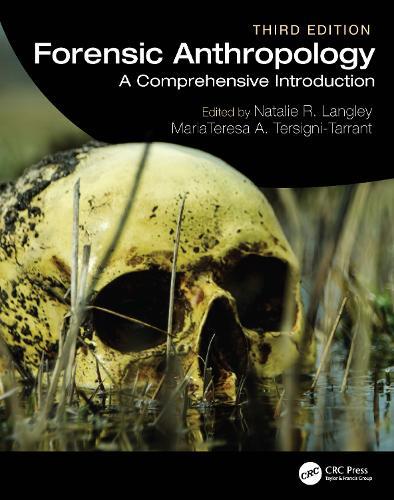
The Third Edition of Forensic Anthropology: A Comprehensive Introduction provides a competency-based, learner-centered approach to the modern landscape of forensic anthropology. This updated volume is strategically organized into four sections, designed to transition learners from foundational concepts to the complex realities of professional practice.
- Section I: Forensic Anthropology and the Crime Scene focuses on the transition toward competency-based education and training, while providing a deep dive into the history of the field, the nature of skeletal remains as evidence, and the precise methods of forensic archaeology and scene recovery.
- Section II: The Skeleton and Skeletal Documentation describes the biological fundamentals, covering human osteology, odontology, skeletal examination, and documentation.
- Section III: Skeletal Individuation and Analyses emphasizes the knowledge and technical expertise required to develop a biological profile and conduct a skeletal analysis. The chapters explain how to estimate sex, population affinity, age, and stature, with an entire chapter focused on how to use Fordisc 3. This section also explores how pathological conditions may serve as vital individuating traits and discusses how to interpret and report skeletal trauma.
- Section IV: Human Identification and Advanced Applications addresses high-stakes scenarios, including postmortem interval (PMI) estimation, the investigation of mass fatalities and international crimes, and advanced scene topics such as fire and commingling. It concludes with critical guidance on courtroom procedures and expert witness testimony, ensuring readers are prepared to bridge the gap between academic knowledge and the legal requirements of the field.
This edition serves as an indispensable resource for students at all levels—from undergraduate to PhD—and provides a robust reference for practitioners and instructors. The editors' experiences as former American Board of Forensic Anthropology board members and presidents provide a unique lens into forensic anthropology education, training, and certification. Chapter learning objectives are related to the ABFA's core competencies, which are listed at the end of each chapter. Chapter content is also aligned with ASB (Academy Standards Board) and OSAC (Organization of Scientific Area Committees) standards, which are cited and/or summarized in each chapter for which a standard has been published. Each chapter also provides review questions to ensure learners understand important concepts. Chapter ancillaries—including an Instructor's Manual with Exam Questions, Chapter Exercises, and chapter PowerPointTM slides—are available for adopters and qualified course instructors.
Description
The Third Edition of Forensic Anthropology: A Comprehensive Introduction provides a competency-based, learner-centered approach to the modern landscape of forensic anthropology. This updated volume is strategically organized into four sections, designed to transition learners from foundational concepts to the complex realities of professional practice.
- Section I: Forensic Anthropology and the Crime Scene focuses on the transition toward competency-based education and training, while providing a deep dive into the history of the field, the nature of skeletal remains as evidence, and the precise methods of forensic archaeology and scene recovery.
- Section II: The Skeleton and Skeletal Documentation describes the biological fundamentals, covering human osteology, odontology, skeletal examination, and documentation.
- Section III: Skeletal Individuation and Analyses emphasizes the knowledge and technical expertise required to develop a biological profile and conduct a skeletal analysis. The chapters explain how to estimate sex, population affinity, age, and stature, with an entire chapter focused on how to use Fordisc 3. This section also explores how pathological conditions may serve as vital individuating traits and discusses how to interpret and report skeletal trauma.
- Section IV: Human Identification and Advanced Applications addresses high-stakes scenarios, including postmortem interval (PMI) estimation, the investigation of mass fatalities and international crimes, and advanced scene topics such as fire and commingling. It concludes with critical guidance on courtroom procedures and expert witness testimony, ensuring readers are prepared to bridge the gap between academic knowledge and the legal requirements of the field.
This edition serves as an indispensable resource for students at all levels—from undergraduate to PhD—and provides a robust reference for practitioners and instructors. The editors' experiences as former American Board of Forensic Anthropology board members and presidents provide a unique lens into forensic anthropology education, training, and certification. Chapter learning objectives are related to the ABFA's core competencies, which are listed at the end of each chapter. Chapter content is also aligned with ASB (Academy Standards Board) and OSAC (Organization of Scientific Area Committees) standards, which are cited and/or summarized in each chapter for which a standard has been published. Each chapter also provides review questions to ensure learners understand important concepts. Chapter ancillaries—including an Instructor's Manual with Exam Questions, Chapter Exercises, and chapter PowerPointTM slides—are available for adopters and qualified course instructors.