$7.62
Original: $21.78
-65%Logos—
$21.78
$7.62The Story
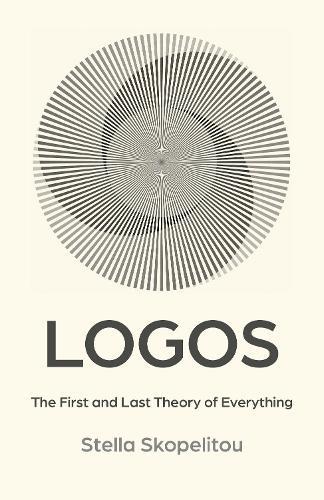
Logos: The First & Last Theory of Everything�is a philosophical work arguing that language (Logos) is not merely a medium but also the foundation of reality itself. This book will take readers on a journey that is at once rational and mystical, using a radical extension of Cartesian doubt and extreme simplicity (Ockham�s razor) to show how the irreducible condition for every experience, thought, truth, and theory can only be Logos. Everything starts from a simple axiom: Everything is a word. From this starting point, the book unfolds a sweeping framework. Time and mathematics are shown to be inventions, not discoveries. Science and objectivity are revealed as mediated through subjective language. Even the universe itself is reframed as a word, articulated only within Logos. Theological categories -�omnipotence, omniscience, omnipresence -�are also reinterpreted as structural features of Logos itself. Blending philosophy, dialogue, symbolic logic, and poetic reflection, Logos performs its thesis as much as it argues it. The result is a work that, hopefully, unifies science, philosophy, and myth while offering a profound recognition of freedom and interconnection. Once one accepts the initial axiom -�that the medium of all inquiry is also its subject -�everything else clicks into place.
Description
Logos: The First & Last Theory of Everything�is a philosophical work arguing that language (Logos) is not merely a medium but also the foundation of reality itself. This book will take readers on a journey that is at once rational and mystical, using a radical extension of Cartesian doubt and extreme simplicity (Ockham�s razor) to show how the irreducible condition for every experience, thought, truth, and theory can only be Logos. Everything starts from a simple axiom: Everything is a word. From this starting point, the book unfolds a sweeping framework. Time and mathematics are shown to be inventions, not discoveries. Science and objectivity are revealed as mediated through subjective language. Even the universe itself is reframed as a word, articulated only within Logos. Theological categories -�omnipotence, omniscience, omnipresence -�are also reinterpreted as structural features of Logos itself. Blending philosophy, dialogue, symbolic logic, and poetic reflection, Logos performs its thesis as much as it argues it. The result is a work that, hopefully, unifies science, philosophy, and myth while offering a profound recognition of freedom and interconnection. Once one accepts the initial axiom -�that the medium of all inquiry is also its subject -�everything else clicks into place.