Original: $226.28
-65%$226.28
$79.20The Story
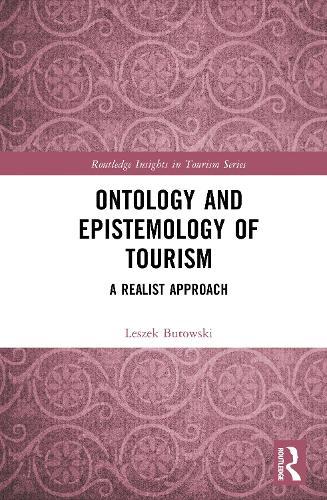
By integrating social ontology and epistemology, the book offers a systematic realist account of tourism, explaining how tourist entities, institutions, and practices are constituted, how tourism reality is structured as a domain of social reality, and how knowledge about this domain can be justified.
It provides a clear philosophical foundation for understanding tourism by learning how tourism reality is constituted and how knowledge about it can be justified. The book delivers these benefits through a systematic framework that integrates social ontology and epistemology, drawing on realist philosophy and Searle-inspired social ontology. It clarifies key concepts, distinguishes types of entities and facts within tourism reality, and explains the institutional mechanisms, such as collective intentionality, status functions, and constitutive rules, that structure the tourism domain. These theoretical arguments are illustrated with real-world examples from tourism practice that help explain how particular aspects of the framework operate in concrete contexts. By combining conceptual analysis with a coherent epistemological account of how tourism knowledge can be evaluated, the book provides researchers and advanced students with a rigorous meta-theoretical framework that supports clearer interpretation, stronger theoretical grounding, and more consistent research in tourism studies.
The book is intended primarily for scholars, researchers, and postgraduates in tourism studies who seek a deeper theoretical and philosophical understanding of tourism as a social phenomenon. It will also be of interest to academics in sociology, human geography, economics, anthropology, and philosophy of the social sciences, particularly those concerned with social ontology and epistemology. It may also benefit advanced graduate students and researchers engaged in theoretical, conceptual, or interdisciplinary work on tourism and social reality for its analysis of tourism reality.
Description
By integrating social ontology and epistemology, the book offers a systematic realist account of tourism, explaining how tourist entities, institutions, and practices are constituted, how tourism reality is structured as a domain of social reality, and how knowledge about this domain can be justified.
It provides a clear philosophical foundation for understanding tourism by learning how tourism reality is constituted and how knowledge about it can be justified. The book delivers these benefits through a systematic framework that integrates social ontology and epistemology, drawing on realist philosophy and Searle-inspired social ontology. It clarifies key concepts, distinguishes types of entities and facts within tourism reality, and explains the institutional mechanisms, such as collective intentionality, status functions, and constitutive rules, that structure the tourism domain. These theoretical arguments are illustrated with real-world examples from tourism practice that help explain how particular aspects of the framework operate in concrete contexts. By combining conceptual analysis with a coherent epistemological account of how tourism knowledge can be evaluated, the book provides researchers and advanced students with a rigorous meta-theoretical framework that supports clearer interpretation, stronger theoretical grounding, and more consistent research in tourism studies.
The book is intended primarily for scholars, researchers, and postgraduates in tourism studies who seek a deeper theoretical and philosophical understanding of tourism as a social phenomenon. It will also be of interest to academics in sociology, human geography, economics, anthropology, and philosophy of the social sciences, particularly those concerned with social ontology and epistemology. It may also benefit advanced graduate students and researchers engaged in theoretical, conceptual, or interdisciplinary work on tourism and social reality for its analysis of tourism reality.