The Story
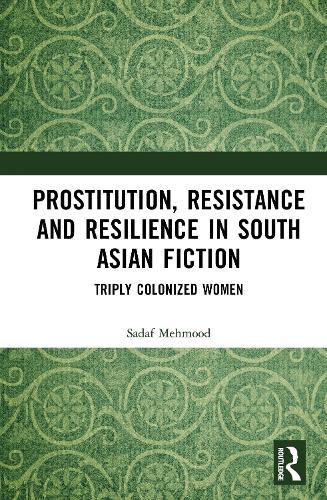
Frequently labelled as the world’s oldest profession, prostitution is often treated as a naturalized social formation, overlooking its historical and cultural specificity. This book focuses on the practices of prostitution in postcolonial South Asia, where it predominantly involves men purchasing sexual services from women. It examines the ternary colonization of South Asian women in prostitution, shaped by their forbidden indulgence in sexual relations and desires.
Through an analysis of South Asian novels by indigenous authors written between 1899 and 2021, the author explores the ambivalent social and cultural hierarchies of the region. While men who exploit these women are absolved of condemnation, the women are penalized and stigmatized for their perceived misconduct. Prostitutes are positioned as excluded figures, trapped in institutionalized victimhood and coercion, with their experiences remaining hidden from mainstream society. The book brackets moral definitions of prostitution to investigate its broader social and political meanings, offering a nuanced understanding of this practice.
An essential resource for students and researchers, this book spans disciplines including history, women’s studies, gender studies, sexuality, literary studies, women’s health, postcolonialism, literature, anthropology, sociology, development studies, and South Asian studies.
Description
Frequently labelled as the world’s oldest profession, prostitution is often treated as a naturalized social formation, overlooking its historical and cultural specificity. This book focuses on the practices of prostitution in postcolonial South Asia, where it predominantly involves men purchasing sexual services from women. It examines the ternary colonization of South Asian women in prostitution, shaped by their forbidden indulgence in sexual relations and desires.
Through an analysis of South Asian novels by indigenous authors written between 1899 and 2021, the author explores the ambivalent social and cultural hierarchies of the region. While men who exploit these women are absolved of condemnation, the women are penalized and stigmatized for their perceived misconduct. Prostitutes are positioned as excluded figures, trapped in institutionalized victimhood and coercion, with their experiences remaining hidden from mainstream society. The book brackets moral definitions of prostitution to investigate its broader social and political meanings, offering a nuanced understanding of this practice.
An essential resource for students and researchers, this book spans disciplines including history, women’s studies, gender studies, sexuality, literary studies, women’s health, postcolonialism, literature, anthropology, sociology, development studies, and South Asian studies.